From Audience to User
Interactivity
“New media” can (possibly) be best understood through consideration of the user experience it entails. In essence, this new media represents a democratization of entertainment, affording the everyman the ability to produce, distribute, and consume media entertainment while simultaneously enjoying on-demand and real-time access. Notably, the environments which facilitate this phenomenon are predominantly digital and characterized by an abundance of interactivity and virtuality.
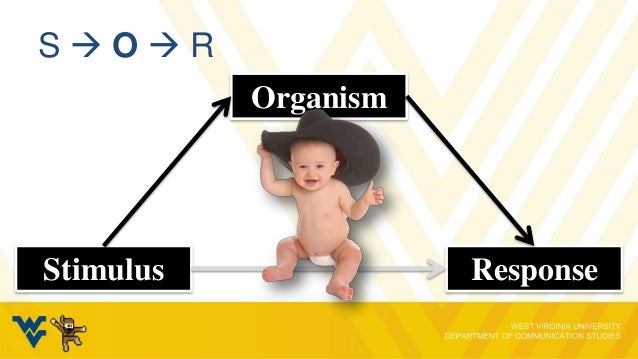
It is important to bear in mind that what constitutes “new” is entirely temporal, that is to say, all technologies are new at some point, and that simple newness does not necessitate consideration or study. It is, instead, the introduction of new functionality and utility that demands scrutiny and closer examination. As such consider what it is that constitutes “new” when conceptualizing or operationalizing that expression for empirical consideration. Reflecting upon the modified stimulus-response model, it is important to define what the newness actually changes (stimulus, organism, or response).
Control and Demand
Interactivity also changes the input/output process of media. Not only does the passive audience become the active user, the active user also wields more power and responsibility than ever before. Particularly in video games, the user now has to “do” more: commit cognitive attention to on-screen content, conceptualize game spaces and environments as real worlds, and coordinate visual attention with gross/fine motor actions. Gamers are also given to gaming through performance motivation, as compared to a television program or movie, the game will only progress as long as the user is willing and able make it do so.To further distinguish between film (now an old medium) and video games (new, highly interactive medium), these kinds of media elicit different kinds of emotional responses. In film, emotions are empathic in origin, arising from a perceived connection between the audience and a particular character, while in video games emotion is experienced first-hand, as the user is placed directly into the mediated environment. This emotion is also dependent on the user’s level of skill (good=danger control, bad=fear control) resulting in in-game performance being a sign of self; and making virtual actions understandable as real actions undertaken in “possible worlds.”
Presence and “the Valley”

Another way to interpret new media is in terms of presence;
which can be conceptualized as the “illusion of non-mediation.” Presence, as a
concept, can be broken into three dimensions: spatial (physical location),
social (social location), and self (virtual as self). The spatial dimension can
be considered when posing a question like, “do I feel like I am there?” Whereas
the social dimension is illustrated by an online community like Facebook, there
is no physical place where Facebook exists; however, it is a place where people
can go to engage in socialized behaviors. Finally, the self can be understood
as the gamer’s view of their avatar as an extension of themselves. A
comprehensive example of this would be an MMORPG like World of Warcraft, the gamer distinctly views the world (Azeroth)
as a real tangible environment, there is an exchange of social capital with
real-life others, and finally the gamer is, often, deeply invested in their
character as an extension of themselves.
Spatial presence is created through a sense of natural
mapping. Natural mapping is related to what it is that a user is actually
doing. Consider the US military’s use of the game Doom, although it is perceived to be a game about grotesque
violence and killing, the actual behavior that is observed within the soldiers
playing the game had more to do with strategic communication with other players
to achieve goals and overcome obstacles. Although the gameplay and controls
were not especially realistic to actual warfare simulation, the point was not
to convince the soldiers to kill, but rather to convince them to work together.

No comments:
Post a Comment