Tuesday, 2 September 2014

Mobile Phones and New Media

The cellular phone has changed, and will continue to change, the lives of millions around the world.


Wiki_landing_image.jpg


In less than a decade, the cellular phone has driven stunning social change in the developing world, and it has the potential to do still more. Its convenience, ubiquity, data leverage, and wireless infrastructure are proving invaluable in areas that lack landlines and data centers, possessing only archaic alternatives to communication.
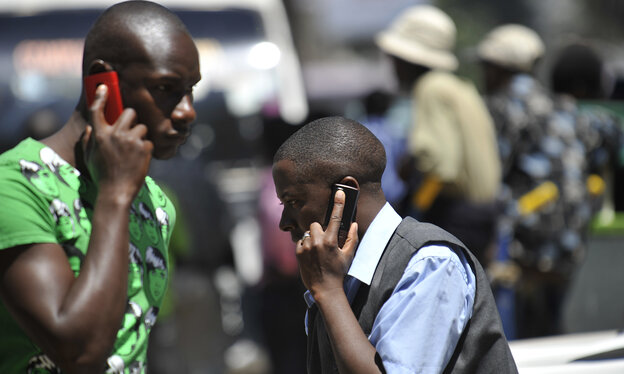
When was the last time you saw a 20-year-old without a phone in his or her hands? Ever wonder what the world was coming to?
 Mobile phones, those always-on, pocket- and purse-sized media platforms, ARE reshaping what the world is coming to. The vibrating and beeping non-stop push notices of posts and messages and tags are prompting young adults to think about connecting to their virtual lives more than to the world around them. And this is not just a Kenyan trend -- this is happening globally.

A new study on the mobile habits of global youth, has found that not only are college students absolutely tethered to their phones, they are absolutely tethered to their friends on phones.

  1. Facebook and Twitter not only are the dominant presence in the lives of students across the globe, they are having a homogenizing effect on how students live around the world. Whether in Bournemouth, Beirut or Boston, students reported that Facebook, Twitter and other social networks were the way they hear from and communicate to their friends and the world. "Twitter has become the new CNN," as one student said. And the study suggests that for students, mobile phones are the new remote controls.
  2. Mobile phones are used to share and comment on other people's social spaces -- and information and news of all kinds is especially valued when it has a great "gee whiz" factor that makes young adults want to pass it on. Said one student: "I don't usually share articles, just some great music news, or a YouTube video that I think is funny or is a music video."
  3. This is not Gen-X or Gen-Y: this is the 'Tethered Generation.' Around the world, mobile phones are integral to students' identity. Students self-reported that they were "addicted," claiming it is literally "impossible" to go a day without a phone. The tracking data reinforced students' heavy use across the world. As one student reported: "I check my phone literally every 2 or 3 minutes for updates on text messages, Twitter, or even Facebook." Said another: "The mobile phone has become a part of us: our best friend who will save all our secrets, pleasures and sorrows."
  4. Students use mobile phones to network with others -- and being a part of that network is more real than the real world. For students, phones don't just facilitate conversations, they connect them to others in ways that are not only satisfying, but increasingly paramount. Observed one student: "One thing that seems kind of funny to me is one experience that I had last week, we had an earthquake, a big one, and a lot of people instead of being alert and try to save themselves, they just started tweeting about what was going on. They were so attached to their social networks that they cared more about letting people know what was happening instead of evacuating the building."
  5. On mobile phones, apps are like cable TV. While they appreciate the thousands of options, students really only use a few apps. While a majority of the students in the study had 16 or more apps on their phones, they reported they only used 3 or 4 apps regularly. Said one student: "The three Apps that I use the most [are] Facebook, Twitter, and Instagram. I love being able to see what my friends are up to and look at their pictures. I also enjoy the diverse combination of news articles, humor, and lifestyle pieces that these various platforms provide."
More than any other platform, mobile phones have initiated a global youth digital culture, by making content and comment available all the time, wherever students are. The result is that students not only take in endless amounts of information, but personalize and reorganize it.

In some ways, this is good news: individual voices are speaking out on a broad-based, democratizing platform that by its sheer existence helps to foster transparency and freedom of expression. Students share content and express their opinions all day, every day. Said one study participant: "Mobile phones allow us to participate in areas of the media which we would otherwise be excluded from."
But there is a cautionary note from the Tethered World study. As global youths bring their interests, their friends and their very identities online, the data that defines them can be gathered and abused by those other than friends. As one student worriedly mused: "Our lives have become available to anyone who can access them -- which is just about everyone everywhere in the world."

Interactivity and new media

From Audience to User

Interactivity

Interactivity is the defining component of “new media,” introducing two-way feedback into entertainment media—resulting in the once passive audience instead becoming active users. Interactivity affords these users the ability to influence both form (the way we get entertainment media) and content (the actual entertainment media itself). Specifically, interactivity concerns the degree to which communication technology can create a mediated environment in which participants can communicate with one another (one-on-one, one-to-many, many-to-many) both synchronously and asynchronously and participate in reciprocal message exchanges.

“New media” can (possibly) be best understood through consideration of the user experience it entails. In essence, this new media represents a democratization of entertainment, affording the everyman the ability to produce, distribute, and consume media entertainment while simultaneously enjoying on-demand and real-time access. Notably, the environments which facilitate this phenomenon are predominantly digital and characterized by an abundance of interactivity and virtuality.

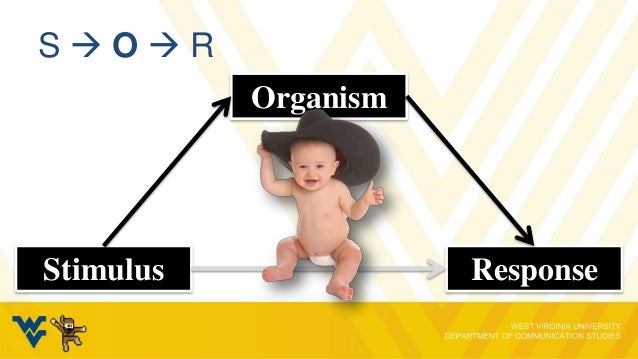
It is important to bear in mind that what constitutes “new” is entirely temporal, that is to say, all technologies are new at some point, and that simple newness does not necessitate consideration or study. It is, instead, the introduction of new functionality and utility that demands scrutiny and closer examination. As such consider what it is that constitutes “new” when conceptualizing or operationalizing that expression for empirical consideration. Reflecting upon the modified stimulus-response model, it is important to define what the newness actually changes (stimulus, organism, or response).

Control and Demand

Interactivity also changes the input/output process of media. Not only does the passive audience become the active user, the active user also wields more power and responsibility than ever before. Particularly in video games, the user now has to “do” more: commit cognitive attention to on-screen content, conceptualize game spaces and environments as real worlds, and coordinate visual attention with gross/fine motor actions. Gamers are also given to gaming through performance motivation, as compared to a television program or movie, the game will only progress as long as the user is willing and able make it do so.

To further distinguish between film (now an old medium) and video games (new, highly interactive medium), these kinds of media elicit different kinds of emotional responses. In film, emotions are empathic in origin, arising from a perceived connection between the audience and a particular character, while in video games emotion is experienced first-hand, as the user is placed directly into the mediated environment. This emotion is also dependent on the user’s level of skill (good=danger control, bad=fear control) resulting in in-game performance being a sign of self; and making virtual actions understandable as real actions undertaken in “possible worlds.”

Presence and “the Valley”

Another way to interpret new media is in terms of presence; which can be conceptualized as the “illusion of non-mediation.” Presence, as a concept, can be broken into three dimensions: spatial (physical location), social (social location), and self (virtual as self). The spatial dimension can be considered when posing a question like, “do I feel like I am there?” Whereas the social dimension is illustrated by an online community like Facebook, there is no physical place where Facebook exists; however, it is a place where people can go to engage in socialized behaviors. Finally, the self can be understood as the gamer’s view of their avatar as an extension of themselves. A comprehensive example of this would be an MMORPG like World of Warcraft, the gamer distinctly views the world (Azeroth) as a real tangible environment, there is an exchange of social capital with real-life others, and finally the gamer is, often, deeply invested in their character as an extension of themselves.
Spatial presence is created through a sense of natural mapping. Natural mapping is related to what it is that a user is actually doing. Consider the US military’s use of the game Doom, although it is perceived to be a game about grotesque violence and killing, the actual behavior that is observed within the soldiers playing the game had more to do with strategic communication with other players to achieve goals and overcome obstacles. Although the gameplay and controls were not especially realistic to actual warfare simulation, the point was not to convince the soldiers to kill, but rather to convince them to work together.

Engaging new media